
Which month suits Shibuya
There is no single best month. The crossing, the shops and the viewpoints work all year, so the choice depends on how much heat, cold and rain you accept. Based on temperatures alone, spring and November suit long walks between Shibuya, Harajuku and Omotesando.
The numbers below are Tokyo's long-term averages for 1991 to 2020. They show what a typical month looks like, not a forecast for your dates.
Tokyo weather by month
Monthly averages of daily highs and lows, and average monthly rainfall.
| Month | High °C | Low °C | Rain mm |
|---|---|---|---|
| January | 9.8 | 1.2 | 59.7 |
| February | 10.9 | 2.1 | 56.5 |
| March | 14.2 | 5.0 | 116.0 |
| April | 19.4 | 9.8 | 133.7 |
| May | 23.6 | 14.6 | 139.7 |
| June | 26.1 | 18.5 | 167.8 |
| July | 29.9 | 22.4 | 156.2 |
| August | 31.3 | 23.5 | 154.7 |
| September | 27.5 | 20.3 | 224.9 |
| October | 22.0 | 14.8 | 234.8 |
| November | 16.7 | 8.8 | 96.3 |
| December | 12.0 | 3.8 | 57.9 |
The highs and lows are averages of daily values, not records. A single day can be warmer or colder. October has more rain on average than June, so do not call autumn dry.
Shibuya tours for any season
Walks, food tours and evening tours that start in Shibuya, with live prices and availability.
The seasons in Shibuya
What each part of the year means on the street.
Spring, March to May
Highs rise from 14.2 °C in March to 23.6 °C in May. The average cherry blossom dates are 24 March for first bloom and 31 March for full bloom, based on the trees used for Tokyo's blossom records, not every tree in the city. Timing varies by year, so do not book around an exact day. Rain is moderate, 116 to 140 mm a month.
Harajuku and Meiji Jingu →Rainy season, June to mid-July
The long-term span for the Kanto region is about 7 June to 19 July. In 2026 the season ran from about 2 June to 19 July, but that year's dates do not repeat. June brings 167.8 mm on average. Plan indoor stops such as shops and food halls, and keep the Sky Gallery in mind.
Shopping guide →Summer, July and August
This is the hottest stretch, with highs of 29.9 and 31.3 °C and nights near 22 to 24 °C. Walk in the morning or after sunset. Extreme heat is one of the reasons the Shibuya Sky roof may close.
Typhoon months, July to October
Typhoons form, approach and make landfall most often in this period. No monthly chance of a hit on Shibuya can be given, so keep your plans flexible and have an indoor option for each day. September and October are the wettest months.
Autumn, late October to November
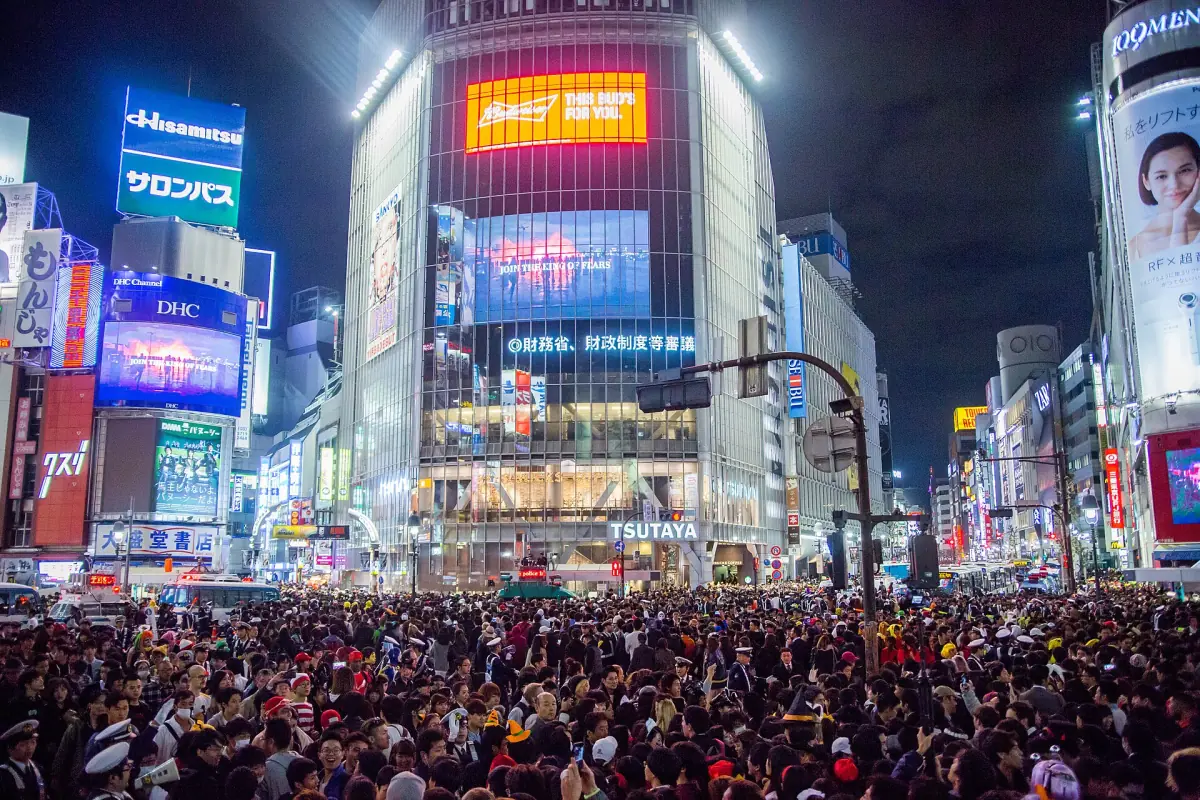
November is the mild option: 16.7 °C highs, 8.8 °C lows and 96.3 mm of rain, far less than October. Halloween on 31 October brings extra rules and crowds.
Halloween in Shibuya →Winter, December to February
Highs stay around 10 to 12 °C and lows get close to freezing in January. Rain is low, 56 to 60 mm a month. The year change has its own page because the usual countdown plans can change.
New Year's Eve →Choose by goal
A reading of the table, not a ranking of months.
| Goal | Months that fit | Why |
|---|---|---|
| Long walks | March to May, November | Highs between about 14 and 24 °C |
| Cherry blossom | Late March to early April | Average full bloom is 31 March, varies by year |
| Least rain | December to February | Under 60 mm a month |
| Avoid heat | November to March | Highs below 17 °C |
| Avoid wet months | Not June, September, October | Over 165 mm a month |
When the sky matters
Weather and the viewpoints.
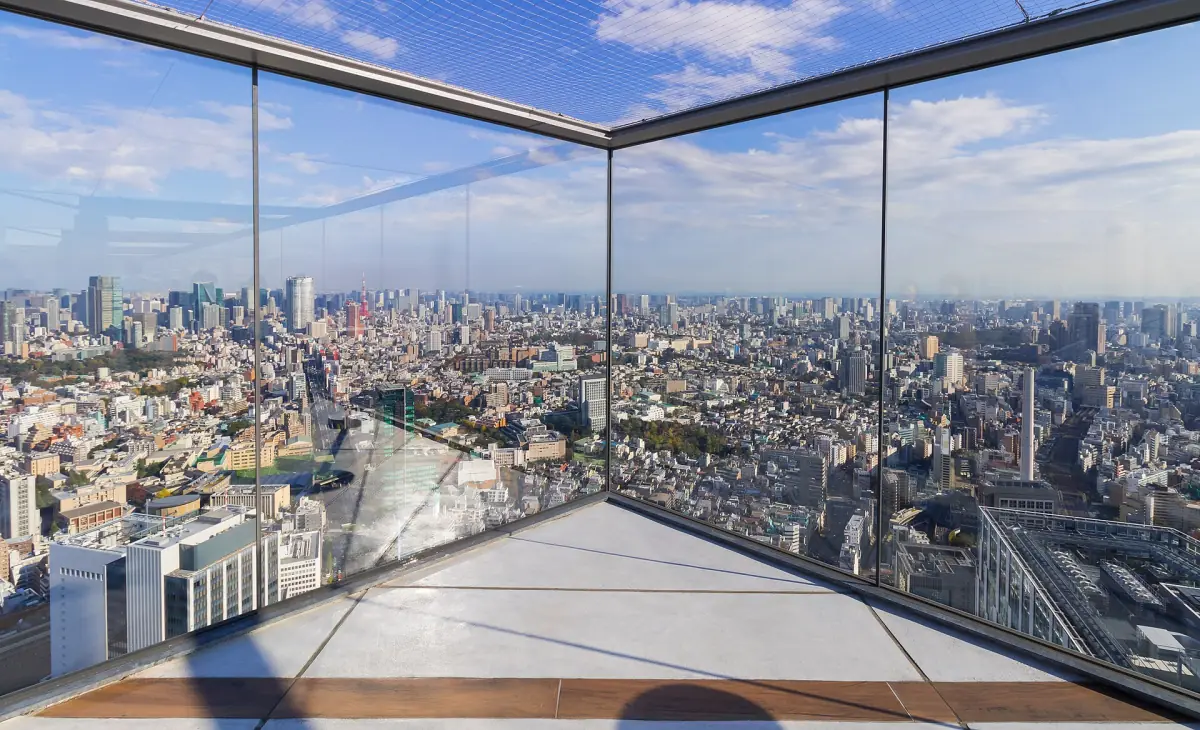
Shibuya Sky is open from 10:00 to 22:30, with last entry at 21:20. Tickets from 15:00 cost more than earlier slots, and a sunset view is not guaranteed by the price. The operator can close the roof for strong wind, rain, snow, thunderstorms, smog or extreme heat. A clear view of Mount Fuji cannot be promised for any date. If the roof closes, the indoor Sky Gallery is a separate area, and it is described as an option for rainy days.
Meiji Jingu follows the season: it opens at 5:00 a.m. from May to August and at 6:40 a.m. in December and January. Closing time runs from 16:00 in December to 18:30 in June. Check the shrine's own table if you plan an early or late visit. For an Asakusa add-on in any season, see the Senso-ji guide.

Best time to visit Tokyo: frequently asked questions
What is the best month to visit Tokyo?
For walking, March to May and November have the mildest highs, from about 14 to 24 °C. Pick a month by what you want to avoid: heat in summer, rain in June, September and October, or cold in January.
When do the cherry blossoms bloom in Tokyo?
On average the first bloom is on 24 March and full bloom on 31 March, from 1991 to 2020 records. The exact days change every year, so keep your dates flexible.
When is the rainy season in Tokyo?
The long-term span in the Kanto region is about 7 June to 19 July. The start and end vary from year to year.
Is October a dry month?
No. October averages 234.8 mm of rain, more than June at 167.8 mm. Typhoons are also most frequent from July to October.
Is summer too hot for Shibuya?
July and August bring highs near 30 to 31 °C and warm nights. Many visitors manage with morning walks, indoor breaks and an evening view. Heat can also close the Shibuya Sky roof.